Hated Halloween Treats
You won’t have any trouble finding someone who hates one of these candies, but there remain die-hard fans of all three, as well. All of them have their detractors, for being too sweet, a strange texture, or in the case of licorice, perhaps just plain gross. Whatever your opinion, it might surprise you that all three have deep and interesting histories. Watch The History Guy tell the story of these treats below, or read a little about what makes these candies special:
Black Licorice
 Black Licorice has an ancient history, and comes from a plant that is widely distributed in Asia, Europe, and North Africa. It has been eaten for at least millennia, and touted a medicinal remedy for all manner of things. Hippocrates said it satisfied thirst, and that with it you could go “eleven or twelve days without drinking”. It was known as a medicine in the middle ages as well.
It is especially tied to the English town Pontefract, which has been known for its licorice since at least the 16th century. By 1614 they were making ‘lozenges’ that were probably dissolved in water. It was in Pontefract that licorice as a confection began, when George Dunhill began adding sugar, although there are others who claim to have invented black licorice as a candy, like Giorgio Amarelli in Italy.
It was American companies that began creating “red” licorice in the 20th century, so-called because they made it in the same shape as original licorice, which the American companies retroactively dubbed “Black licorice”. Good and Plenty, licorice flavored and possibly the oldest branded candy in the United States, began production in 1893. (A note – while Necco Wafers are inarguably an older candy, the branded name did not come until after 1900; the New England Confectionary Company (Necco) only formed from in a merger with other companies in 1901.)
Circus Peanuts
Almost as divisive as licorice, circus peanuts are an enigma. Literally – we have no idea who invented the things, except that they probably first appeared in late 1800s. Despite having a rather involved recipe that gives them their particular texture, which is not quite like a regular marshmallow, no one seems to have patented the process. Several companies have made them for decades, but as candy company Spangler says, “We’ve tried to find out [why they’re called circus peanuts.] We’ve asked people in the Spangler Family. We’ve asked historians from Barnum and Bailey circus. But no one knows. For that matter, no one knows why they’re orange or why they’re flavored like bananas.”
And that’s right – they are banana flavored. Why is apparently anyone’s guess. “Marshmallow Peanuts” are advertised as early as 1903, and as “circus peanuts” by 1919. But who chose orange – not an especially accurate color – or the peanut shape, no one knows. The Owner of Candy Wholesaler Candy favorites even calls them “not so much candy as Americana”. There are more than a few people who would agree that they don’t deserve the name “candy”.
Oh – and they have another connection to history. According to General Mills, John Holahan came up with the idea for Lucky Charms cereal when he chopped up circus peanuts into cheerios, which led to the creation of “marbits”, the tiny marshmallow pieces that are “magically delicious”.
Candy Corn
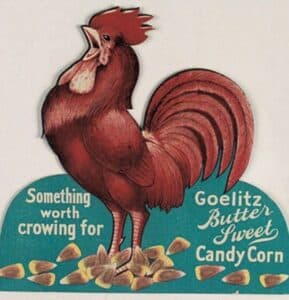
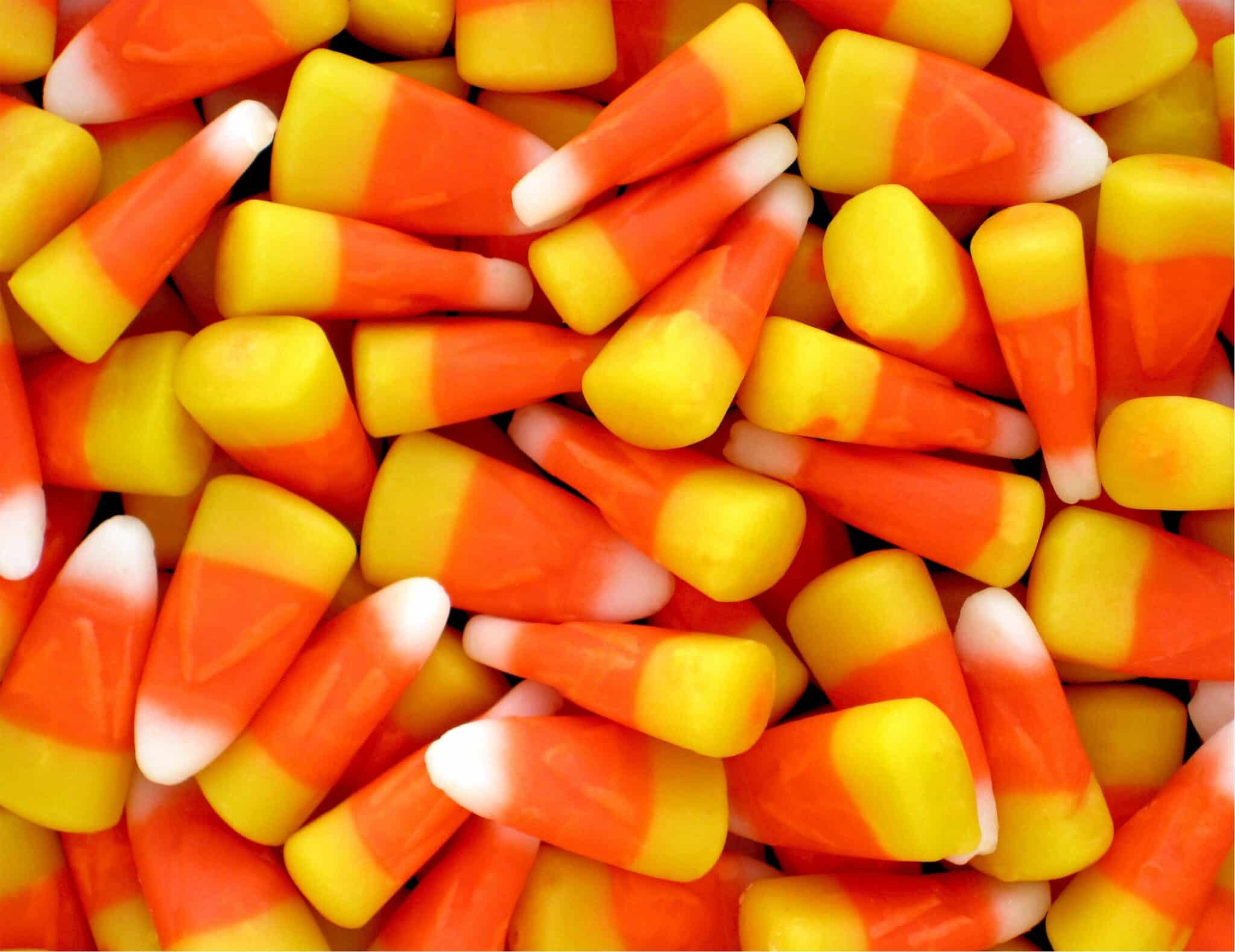
Another contender for “most-hated” candy is candy corn. There is actually disagreement about who first invented the things, but they originate in the mid 1800s, and are generally credited to Phillip Wunderle. He began working with George Renninger in Philadelphia in 1876, and Renninger is said to have invented “butter cream”, the material for candy corn, in 1888. He didn’t pick the corn shape first, making butter cream in the shape of acorns, turnips, and pumpkins.
It wasn’t until Goelitz, today Jelly Belly, began producing them that they became popular. Originally it wasn’t called candy corn, but “chicken feed” or “chicken corn”, and Goelitz credits the candy with carrying the company through two World Wars and the great depression.
But it is, to put it mildly, a hated candy. A reviewer on “the Takeout” website dubbed the texture “satan’s earwax”. It might surprise you that despite all that hate, some 35 million pounds of it are made every year, apparently to collect dust in glass candy bowls.
Featured Articles

Related Videos